

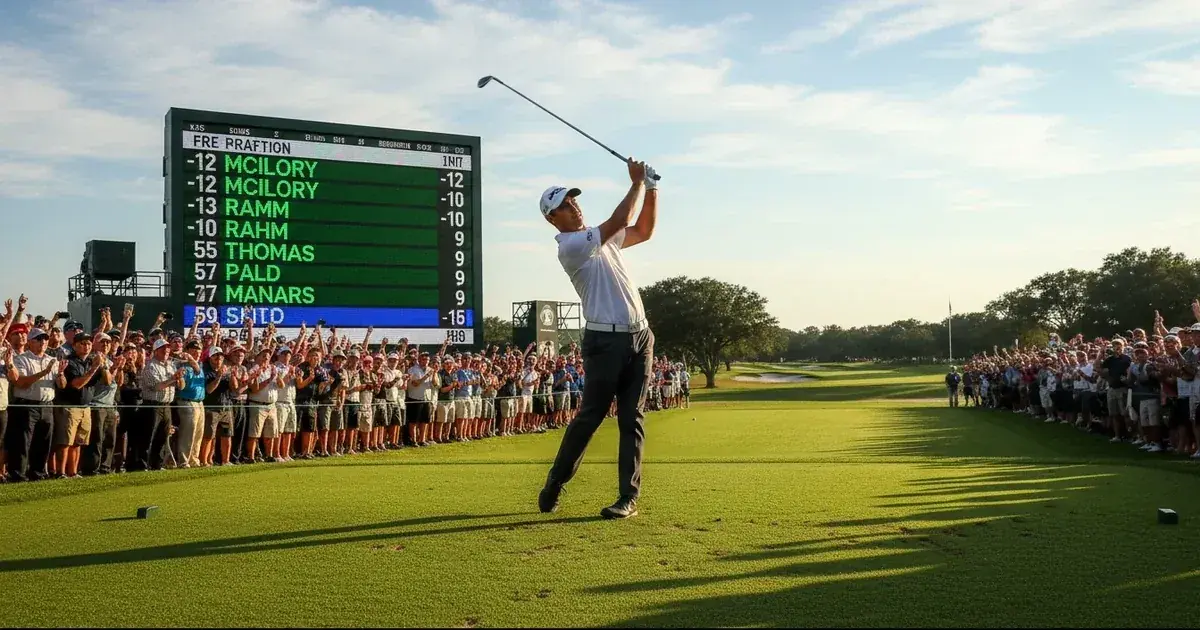
Live betting transforms golf from a four-day waiting game into a dynamic market where opportunities emerge and disappear as every shot is played. While most casual bettors place their wagers before Thursday morning and simply hope for the best, sharp players know that some of the best value in golf betting appears during the tournament itself. Odds shift constantly based on leaderboard movement, and understanding how to read these shifts separates profitable live bettors from those who chase action without edge.
The structure of professional golf creates unique live betting dynamics that do not exist in other sports. Four rounds across four days provide extended windows for analysis and wagering. A player who shoots 74 on Thursday still has 54 holes to recover, and his lengthened odds might represent opportunity rather than warning. Conversely, early leaders often see their odds shorten beyond what their actual winning probability justifies, creating value on players lurking a few shots back.
This guide covers everything you need to know about live golf betting, from understanding how odds move to identifying specific situations where value emerges. Whether you want to bet on outright winners as tournaments unfold, target round-specific markets, explore micro betting on individual holes, or manage existing positions through cash-out decisions, the strategies here will sharpen your approach.
In-play wagering requires quick decisions, so familiarizing yourself with all available types of golf bets will give you a significant advantage.
Analyzing Live Golf Odds and In-Play Market Shifts

Live golf odds update continuously throughout each round based on scoring, leaderboard changes, and betting action. Understanding the mechanics of these movements helps you anticipate where value might appear and react quickly when it does.
Outright winner odds respond most dramatically to scoring. When a player posts a low number and climbs the leaderboard, his odds shorten immediately. A golfer who opened at plus-five-thousand before the tournament might drop to plus-eight-hundred after a Thursday 64 puts him three shots clear. The magnitude of movement depends on how unexpected the performance was and how many players remain in realistic contention.
Odds also reflect relative position as much as absolute score. A player at six under par might have plus-twelve-hundred odds if he leads by four shots or plus-three-thousand odds if he trails the leader by two. The leaderboard context determines value, not just the raw score. This relative pricing creates opportunities when the market overreacts to position changes that do not meaningfully affect actual winning probability.
Sharp money moving through the market triggers adjustments independent of scoring. If respected bettors hammer a specific player’s live odds, sportsbooks adjust prices even before the next shot is played. Watching for sudden line movements without accompanying leaderboard changes can reveal where sharp action is flowing, though acting on this information requires speed that most retail bettors cannot match.
Settlement timing varies by market and sportsbook. Outright bets settle when the tournament ends, including any playoff holes. Round bets typically settle when the final group completes the round. Hole-by-hole micro bets settle within minutes of the hole being completed. Understanding settlement timing prevents confusion about when your money becomes available and helps you plan multi-bet strategies within the same tournament.
Live Outright Winner Markets
The live outright market is where most golf betting action concentrates once tournaments begin. Knowing when to bet on leaders, when to fade them, and where to find value in the chasing pack improves your results in this market.
Backing the leader makes sense when the market has not fully adjusted to their dominant position. Early in tournaments, a player who opens with a 64 might see his odds shorten from plus-three-thousand to plus-eight-hundred, but if he is genuinely playing the best golf in the field and conditions favor his style, those plus-eight-hundred odds might still represent value. The key is assessing whether the performance is sustainable rather than a one-round aberration.
Fading the leader offers value when the market overreacts to temporary leaderboard advantages. Golf leaderboards are volatile, especially through the first two rounds when half the field still has eighteen holes or more to play. A player leading by one shot after Thursday has roughly the same winning probability as someone trailing by two in many cases because so much golf remains. If his odds suggest a much larger advantage, fading him by betting the chasing pack offers positive expected value.
Historical data on Sunday collapses informs how much credit to give leaders entering the final round. Holding a 54-hole lead does not guarantee victory; roughly thirty to forty percent of leaders entering Sunday fail to win. Three-shot leads hold more reliably than one-shot leads, but even substantial advantages evaporate with surprising frequency. This volatility means live odds on chasers often carry more value than live odds on leaders, especially when the leader is a less experienced player or one with a history of struggling under pressure.
Value spots in live outrights often appear in the five-to-fifteen shot range off the lead. Players in this zone have realistic paths to victory if they get hot while the leaders cool off, but their odds remain long because the market focuses attention on the top of the leaderboard. A player at plus-four-thousand who trails by eight shots after Friday can absolutely win if he shoots 65-66 on the weekend while the leader shoots 72-74. These scenarios happen more often than casual observers expect.
Round Betting Opportunities

Round betting creates markets within each day of play, offering shorter-term opportunities that do not require predicting the overall tournament winner. These markets suit bettors who prefer quicker resolution and more frequent action.
Round leader markets ask who will post the lowest score for a single day’s play. Thursday round leader is functionally similar to the first round leader market available pre-tournament, but round leader markets for Friday, Saturday, and Sunday offer opportunities based on updated information about player form and course conditions. A player who struggled Thursday but historically rebounds well might offer round leader value on Friday that pre-tournament markets could not capture.
Round matchups pit two or three players against each other for a single day rather than the full tournament. These markets create focused opportunities to leverage specific observations about how players are performing that week. If Player A’s ball-striking looks sharp but his putter is cold, and Player B is scrambling well but hitting fewer greens, you can bet based on which skill matters more for that day’s course setup without needing either to win the tournament.
Scoring props for individual rounds ask whether specific players or the field overall will shoot over or under certain numbers. These markets let you bet on expected scoring without predicting exact finishing positions. If afternoon wind is building and a player draws a late tee time, his over on the day’s scoring might offer value based on conditions the line does not fully account for.
Round betting offers edge when you identify specific situations the market has not fully priced. Weather changes between morning and afternoon waves create scoring differentials the round markets might not capture quickly enough. Player tendencies for fast or slow starts create value when round leader odds treat all contenders equally. Course setups that play differently on specific days, such as Sunday pins being more accessible to encourage dramatic finishes, affect round scoring in ways you can exploit.
Micro Betting in Golf
Micro betting breaks golf down to individual holes or even individual shots, creating action on the smallest possible increments of play. This market has grown rapidly as technology enables real-time odds updates and settlement.
Hole-by-hole betting asks which of two or three grouped players will score best on the upcoming hole. These bets settle within minutes, providing instant resolution that appeals to bettors who want continuous action throughout a round. The odds typically hover close to even money with slight adjustments based on player tendencies on specific hole types.
Next birdie and next bogey markets expand beyond grouped matchups to ask which player across the entire field will make the next birdie or suffer the next bogey. These markets require tracking multiple groups simultaneously and understanding which holes are yielding scoring opportunities at any moment. The information edge goes to bettors watching comprehensive coverage rather than following a single group.
Proximity props bet on how close approach shots or tee shots will finish to the hole or fairway. These ultra-short-term markets settle within seconds of a shot landing and require real-time shot tracking to engage with effectively. The rapid pace creates entertainment value but also significant risk because the time to analyze each bet is essentially zero.
The risk-reward profile of micro betting differs substantially from traditional golf markets. You can bet hundreds of times during a single round, compounding small edges or small losses into significant results. The speed prevents careful analysis on each bet, which generally favors the house. Most sharp golf bettors avoid heavy micro betting because the analytical edge that drives profit in other markets cannot be applied when decisions must be made in seconds.
However, micro betting does offer value in specific spots where you possess information advantages. If you are watching a group closely and notice a player is struggling with a specific club, that observation might inform hole-by-hole bets before the market adjusts. The key is betting selectively on situations where you have genuine insight rather than treating micro betting as constant action for entertainment.
Live Top Finish and Placement Betting
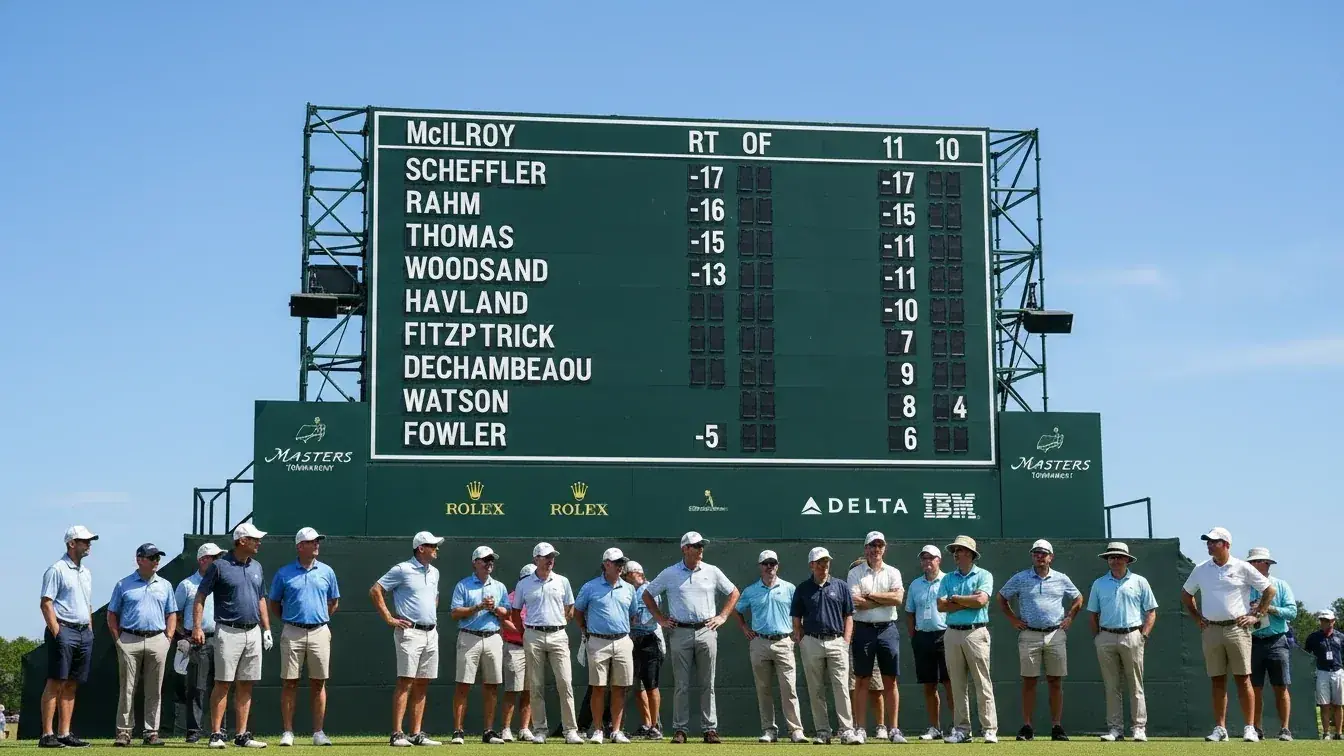
Beyond outright winner markets, live betting includes top five, top ten, and top twenty markets that adjust throughout the tournament. These placement markets sometimes offer better value than live outrights because they receive less attention from sharp bettors.
Live top five value often appears on players who are positioned well but outside immediate contention for the win. A player sitting sixth after 54 holes might have plus-two-hundred odds to finish top five, which seems reasonable on the surface. But if the leaderboard is bunched and several players ahead of him are likely to fall back, his actual top five probability might exceed what those odds imply. Analyzing the players directly ahead and their likelihood of holding position sharpens these assessments.
Saturday night presents a particularly interesting window for placement betting. At this point, you know the 54-hole standings and can estimate how many players are likely to pass or be passed on Sunday. A player sitting twelfth might have strong top ten probability if several players ahead of him are struggling with their ball-striking, even if the market prices his top ten odds generically.
Calculating live placement probability requires estimating score distributions for the players involved. If you think a player sitting eighth will shoot between 68 and 72 on Sunday while players ahead of him will score in a wider range including some 73s and 74s, you can estimate his probability of moving into the top five versus falling out of the top ten. This analysis is imprecise but still more accurate than assuming linear relationships between current position and final placement.
The cut line creates unique live betting dynamics through the first two rounds. As the projected cut line shifts based on scoring, make-cut and miss-cut odds on specific players adjust accordingly. A player at even par might be a strong make-cut bet if early scoring suggests the cut will fall at plus-two, or a miss-cut bet if the cut line projects at minus-one. These markets settle Friday evening, providing relatively quick resolution on positions that can swing dramatically over the final few holes of round two.
Stay updated with real-time analytics and sharp insights on the best golf betting site for serious punters.
Cash-Out Strategies and Decision Making
Most sportsbooks offer cash-out options that let you settle bets early for guaranteed amounts less than the full potential payout. Knowing when to cash out versus letting bets ride is one of the most consequential decisions in live golf betting.
The mathematical reality is that sportsbooks price cash-outs in their favor. The guaranteed amount they offer represents less than the expected value of letting the bet play out, assuming the current odds are accurate. By accepting a cash-out, you are essentially paying a premium for certainty. This premium is the sportsbook’s profit on the transaction.
Despite this mathematical disadvantage, cash-outs make sense in certain situations. If your outright pick holds a Sunday lead and you value certainty over maximized expected value, locking in profit removes the risk of a collapse costing you everything. The emotional comfort of guaranteed money has real value even if it sacrifices some expected return. Personal financial situations also matter; if cashing out secures meaningful profit when you need the money, that utility calculation might favor certainty.
Letting bets ride makes sense when you believe the current odds accurately reflect or underestimate your player’s chances. If your pick enters Sunday with a two-shot lead and the cash-out implies roughly the same probability you independently estimate, there is no mathematical reason to accept the house’s haircut. The uncertainty inherent in Sunday golf does not change the expected value calculation.
Partial cash-out options, available at some sportsbooks, let you lock in profit on part of your bet while letting the remainder ride. This approach balances the desire for certainty against mathematical optimization. You might cash out half your stake to guarantee some profit while keeping half active for full payout potential. The house still takes its cut on the cashed portion, but you reduce variance without eliminating upside entirely.
Emotional discipline matters most when cash-out decisions arise. The urge to lock in profit grows stronger as potential payouts increase, but this emotional response does not correlate with mathematical optimal strategy. Set your cash-out rules before the situation arises and stick to them regardless of how your heart races when the button appears.
The Four-Day Framework for Live Betting

Each day of a golf tournament presents different live betting dynamics based on how the event unfolds. Understanding what to look for on Thursday through Sunday helps you identify value throughout the week.
Thursday establishes initial information about course conditions and player form. Scores from early groups reveal whether the course is playing easier or harder than expected, information you can use when betting on later groups or on Friday markets. Individual player performances either confirm or contradict pre-tournament assessments, updating your probability estimates for outright and placement markets. Thursday live betting focuses on processing new information and identifying players whose odds have not adjusted appropriately to their actual prospects.
Friday centers on cut line dynamics. As the field narrows, players bubble the cut line provide betting opportunities in both directions. Make-cut and miss-cut markets settle Friday evening, creating urgency around these positions. The outright market also shifts dramatically as contenders separate from the pack and longshots either emerge or fade. Friday afternoon is often the most volatile period for live odds because the field has played enough golf to reveal true form while significant uncertainty remains.
Saturday is traditionally moving day when contenders make their runs at the leaderboard. Players who shoot low Saturday rounds see their odds shorten dramatically while those who struggle fade from contention. The key live betting question on Saturday is whether the market is overreacting or underreacting to specific performances. A player who shoots 65 to climb within three shots of the lead might see his odds shorten too much if his overall game does not support that round, or might still offer value if the 65 was consistent with his underlying ball-striking quality.
Sunday concentrates all remaining pressure into eighteen holes where every shot affects betting outcomes. Live odds move most dramatically on Sunday back nines as the field narrows to a handful of realistic contenders. The leader at the turn might see his odds shorten to plus-one-fifty while a player three back gets plus-six-hundred, but those relative prices shift with every hole. Sunday live betting rewards bettors who can assess probability quickly and identify when the market has overcorrected in either direction. The emotional intensity of Sunday golf creates opportunities because casual bettors often make panic decisions that move lines away from fair value.
Tools and Resources for Live Golf Betting
Effective live betting requires real-time information that keeps you ahead of line movements. Building a toolkit of resources improves your ability to identify and act on live value.
Live leaderboard services provide continuous updates on scores across the field. The PGA Tour’s official leaderboard offers free access to hole-by-hole scoring, though slight delays can put you behind bettors using faster sources. Dedicated scoring services sometimes offer faster updates for premium subscribers, though the advantage is measured in seconds and matters mainly for micro betting.
Shot tracking data shows not just scores but how players are achieving them. A player at three under through twelve holes looks different if he has hit eleven greens versus seven greens with successful scrambles. Shot tracking reveals the sustainability of scoring and helps predict whether hot rounds will continue or regression awaits. The PGA Tour’s ShotLink data powers many tracking interfaces, though accessing it in real time requires the right tools.
Weather monitoring becomes live betting data when conditions shift during rounds. Wind building throughout an afternoon affects scoring for late groups differently than early groups, even though they play the same course. Temperature changes affect ball flight and green speeds. Real-time weather apps provide information that might not be reflected in live odds quickly enough to eliminate your edge.
Broadcast coverage shows things that data cannot capture, including player body language, swing quality, and situational responses that hint at form and confidence. Watching the tournament while betting provides qualitative information that pure data analysis misses. The combination of quantitative live data and qualitative broadcast observation creates a fuller picture than either alone.
Multiple sportsbook accounts allow you to compare live odds and ensure you are getting the best available price. Live odds vary across books just as pre-tournament odds do, and the variance can be greater during fast-moving situations. Having accounts funded and ready to bet at several books lets you capture the best price without scrambling to deposit when opportunity appears.
Managing Risk in Live Golf Betting

Live betting introduces risks that pre-tournament betting does not, requiring adjusted bankroll management and discipline.
The speed of live betting can lead to overtrading, placing far more bets than you would in a pre-tournament context. Each bet feels justified in the moment, but the cumulative effect of many small bets with slight negative expected value quickly erodes bankroll. Setting limits on live betting volume before each tournament prevents heat-of-the-moment decisions from compounding.
Chasing losses is easier in live betting because the next opportunity is always seconds away. A bad round leader bet can tempt immediate revenge betting on the next market, starting a cycle that ends with significant losses. The same discipline that prevents chasing in other betting contexts applies here, but the faster pace makes discipline harder to maintain.
Information lag creates risk if you are betting against sharper bettors or faster data sources. By the time you see an opportunity and place your bet, the line might have already moved past fair value. This risk argues for selectivity over volume; bet only on situations where you have clear conviction rather than trying to trade every small edge.
Live betting should complement rather than replace pre-tournament analysis. The value in golf betting comes primarily from identifying mispriced pre-tournament odds based on course fit, form, and other fundamental factors. Live betting offers additional opportunities, but abandoning fundamental analysis in favor of chasing live action undermines the strategic approach that generates profit over time.
The discipline to sit out when no clear value appears matters more in live betting than anywhere else. The constant flow of markets creates pressure to participate even when edge is absent. Accepting that many live betting opportunities are traps rather than edges improves your long-term results more than any specific technique for identifying value.
